
Dog treats can be a practical repeat-buy category for pet stores, distributors, online sellers, and importers, but a useful range is more than a shelf full of near-identical snacks. Buyers normally need several price points, pack formats, textures, and visual directions so customers can choose between everyday chews, meat-led snacks, training-size bites, and retail-ready gift or trial packs.
A more effective buying plan combines complementary formats. Dog dental chews, air-dried jerky, wrapped rolls, and baked biscuits each play a different merchandising role. The objective is not to make one treat product fill a full container. It is to build a sellable assortment and combine it with other pet categories in one coordinated export order.
Start with roles, not a long list of similar SKUs
When a buyer starts with dozens of product photos, the easiest mistake is adding too many items that solve the same retail need. A clearer wholesale dog treat assortment can be structured around four roles:
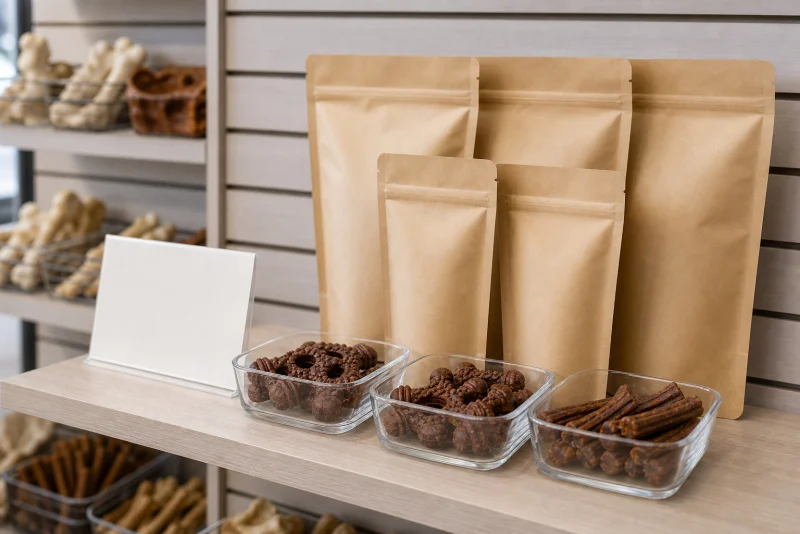
- Chew-led products: dental chew shapes, sticks, and rolls for buyers who need a longer-lasting, visually distinct treat direction.
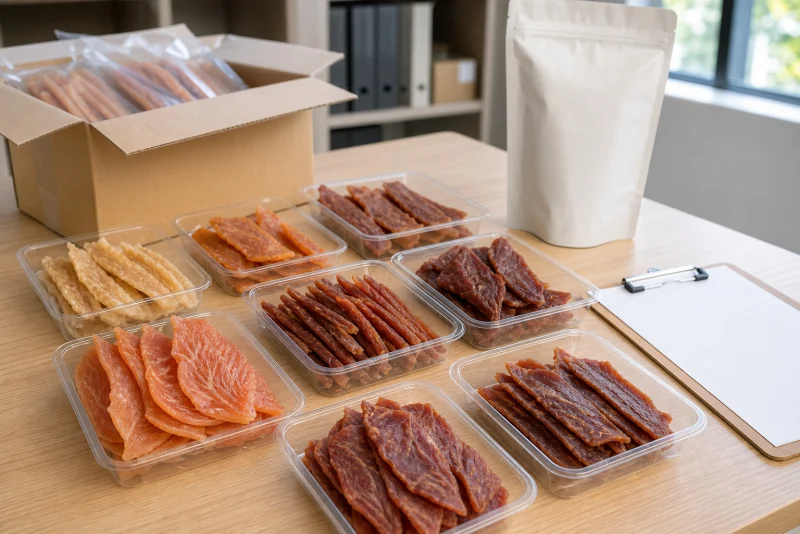
- Meat-led products: jerky strips, slices, small cubes, and meat rolls for a direct protein-style snack selection.
- Crunch and baked products: biscuits, crisps, and small baked shapes for jars, pouches, counter displays, or value packs.
- Trial and add-on formats: smaller pack sizes, mixed shapes, or seasonal variants that can sit beside core lines without duplicating them.
This approach helps buyers compare the products by use and sales position instead of creating a separate URL or purchasing decision for every small shape change. For example, shaped dog dental chews can be reviewed as a grouped range, while chicken and duck jerky treats can provide a separate meat-snack direction.
How to build a balanced starter range
For many pet stores and online sellers, a starter line does not need every available format. A practical first assortment may include one dental-chew family, two meat-led snack directions, and one baked or crunchy line. Within each family, buyers can then compare shape, pack size, color, flavor direction, and label design without turning the assortment into an unmanageable list.
For example, a buyer might combine a toothbrush or bone-shaped chew, a darker air-dried stick or strip, a softer meat roll, and a compact baked snack. The visible differences help retail staff and online shoppers understand the range quickly. Final ingredient claims, feeding guidance, shelf life, and labels should always be confirmed against the approved formula, packaging, and destination-market requirements.
Packaging and sourcing details to confirm early
Packaging has a direct effect on whether the assortment can work in a pet-store shelf, an e-commerce parcel, or a distributor carton. The product itself may be available in more than one retail direction, such as a stand-up pouch, clear window bag, jar, display box, or bulk export pack. The right choice depends on the target market, price point, and expected reorder model.
- Pack weight and count: specify whether the buyer needs a single chew, a trial pouch, a multi-piece retail pack, or a bulk carton.
- Product appearance: review sample color, surface finish, breakage, size tolerance, and consistency across several units.
- Pack protection: verify seals, inner packaging, carton strength, and the product arrangement needed for export handling.
- Retail information: confirm barcode area, label language, date coding, ingredient list, and any required market documentation before artwork approval.
- Reorder identification: keep the confirmed product reference, packaging version, and carton information together so the next order uses the same specification.
QC checkpoints for a mixed dog treat order
QC should focus on the actual product and packaging plan, not only on a product photo. Before shipment, buyers can review item identity, product dimensions or weight range, broken-piece tolerance, visible foreign matter checks, pouch or box sealing, carton marks, date coding, and count per inner pack and master carton. Where several treat families are combined, the SKU code and sample approval record should make it easy to distinguish one variant from another.
This is also where a one-stop sourcing plan adds value. Treats can be planned alongside bowls, toys, beds, carriers, grooming tools, hygiene items, and other pet supplies instead of forcing a separate order for every category. Our mixed container pet supplies service is designed for buyers who want one contact point to compare products, confirm samples and packaging, and build a consolidated purchasing plan.
Use treats as part of a broader store assortment
Dog treats can support the wider pet-supplies basket when they are selected with clear roles. A customer buying a bowl, leash, bed, or toy may also add a small snack pack, while a grooming or hygiene purchase can be paired with a chew-led item. This does not mean every product must be sold as a bundle. It means the buying list can be organized so several related categories are available from one coordinated sourcing workflow.
For an additional treat-focused reference, read our guide to shaped dog dental chews as repeat-buy SKUs. When you are ready to compare options, send the target market, preferred treat formats, packaging references, estimated quantities, and any products you want to consolidate with the treat order. We can help review suitable options and map them into a practical mixed-category purchase plan.