
Cat feeding products can become repetitive when every bowl, color, and bowl count is handled as a separate purchasing decision. Raised bowl stands give buyers a more design-led feeding direction: a ceramic bowl set held in a low wood or wood-look base. This creates a clear retail distinction from basic plastic bowls, individual loose bowls, and bulk feeding accessories without asking a buyer to manage dozens of near-identical SKUs.
The cat bowl stands and raised feeding stations range groups related double-bowl, three-bowl, and color options under one product family. That makes it easier to compare the selected stand form, bowl count, ceramic color, packaging, and target price direction while keeping the final order and repeat-order reference clear.
Why raised feeding stations add a separate retail story
For a pet store shelf or an e-commerce collection, a bowl stand can be presented as a complete feeding set rather than an interchangeable bowl. The visible stand, coordinated ceramic bowls, and grouped bowl positions make the product easier to merchandise by style. It also gives buyers a product that can sit beside a standard bowl range without creating a duplicate listing.
This is a retail-positioning benefit, not a substitute for product-specific usage claims. Buyers should describe the selected materials, bowl count, size, care instructions, and packaging accurately, and confirm any market-specific labelling or product requirements before bulk purchase. For a simpler feeding direction, see melamine pet bowls or plastic double feeding bowls.
Build the assortment by bowl count and visual direction
A controlled starter range does not need every available combination. The current product family includes double ceramic bowl stands, three-bowl feeding stations, and selected white, pink, yellow, or custom bowl-color directions by order plan. Representative source sizes include approximately 39 x 18 x 11 cm for a standard double-bowl stand, 34 x 18 x 11.5 cm for selected double-stand styles, and 48 x 11.5 x 18 cm for a selected three-bowl station. Final dimensions, materials, colors, and packed specification must be confirmed against the approved model and supplier quotation.
- Core double-bowl stands: a clear first option for buyers who need a compact, coordinated feeding set.
- Three-bowl stations: a visibly different configuration that can give the collection a broader assortment role.
- Color-led alternatives: selected ceramic bowl colors that can support a store's preferred visual mix without multiplying product URLs.
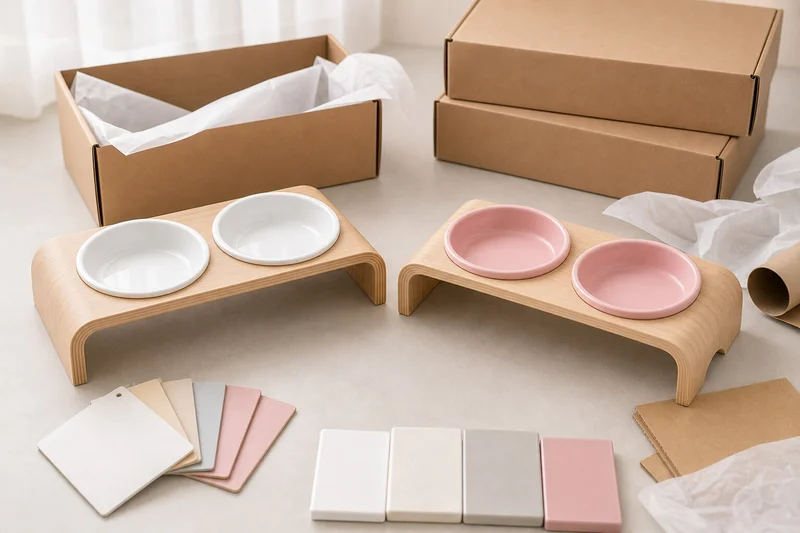
- Packaging versions: plain export cartons, retail labels, insert cards, barcode space, and buyer-brand presentation can be reviewed against the order plan.
Keeping these related variants together helps a buyer compare product roles in one place. A practical first order can select a core white double stand, one three-bowl model, and one color alternative, then expand after the sample and sales-channel plan are confirmed.
What to check during sample and packaging review
A product photo is useful for comparing forms, but the final order should be approved against the selected sample. For this family, buyers can check the stand profile, visible wood or wood-look finish, bowl cut-out fit, ceramic bowl appearance, color consistency, edge finish, packing protection, product count per carton, and the approved retail or export presentation.
It is also important to record the exact model reference. A double stand and a three-bowl station may look related but have different dimensions and carton requirements. Keep the confirmed model number, reference image, bowl color, packaging version, carton details, and barcode or insert requirements together. This makes a reorder easier to coordinate and avoids treating a visual variation as a separate untraceable item.
Show the product form clearly in retail and e-commerce images
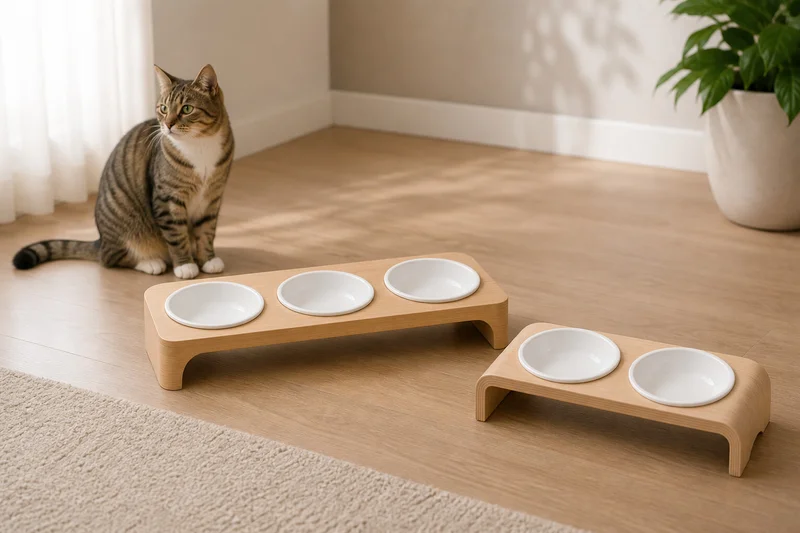
The strongest images for this family show the full stand, bowl count, ceramic color, and the contrast between the bowl set and base. A calm room scene can help a customer understand the product category, but the product should remain fully visible and should not be paired with unsupported claims. Clear detail photography of the bowl finish, stand edge, and selected color option is more useful than a crowded collage.
Combine feeding stations with a broader cat-supplies order
Raised feeding stations can anchor a small feeding section and still fit into a wider one-stop purchase plan. Buyers can combine them with cat wet food pouches, cat treat tubes and puree sticks, toys, rest products, and hygiene items according to the target channel. The aim is not to make every product fill a separate container, but to build a balanced product mix with one coordinated sourcing workflow.
For additional buying context, read our melamine pet bowls guide and review our mixed container pet supplies service. Send your target market, preferred stand forms, bowl colors, packaging references, and estimated quantity. Xinji Pet Supplies can help compare suitable options and prepare a practical mixed-category purchase plan.