
Canned cat food can become difficult to organise when every recipe, artwork option, can size, and carton is treated as a separate purchasing project. A practical retail range starts with the product form: ordinary round metal cans in a selected small and larger format, with a controlled number of recipe directions and a clear packaging plan. This helps pet stores, importers, and online sellers compare options without building a catalogue full of near-duplicate listings.
The canned cat food wholesale range includes 85 g and 375 g can examples with chicken, duck, tuna, salmon, pumpkin, and mixed recipe directions by project. The confirmed recipe, ingredients, feeding guidance, net weight, can specification, shelf life, labels, export carton, and any market-specific registration or labelling requirements must be agreed from the selected product documents before an order is approved.
Give each can size a clear assortment role
Small and larger cans do not need to compete with one another. An 85 g example can work as a compact retail choice, while a 375 g example gives buyers a visibly larger can direction for the same category. The final assortment should be led by the buyer's market, sales channel, consumer pack preference, and confirmed product specification rather than an assumption that one size will suit every store.
A focused first range can use one selected small-can format, one selected larger-can format, and a limited number of recipe directions. That makes shelf presentation easier to understand and makes quotation, artwork approval, carton planning, and repeat ordering more traceable. The objective is a clear product family, not dozens of isolated can pages with only small visual differences.
- 85 g can direction: a compact format to evaluate where a smaller single retail unit fits the target category.
- 375 g can direction: a larger-format alternative that gives the range a separate size and usage-positioning option.
- Recipe selection: chicken, duck, tuna, salmon, pumpkin, and mixed directions should be selected only from the confirmed supplier options for the project.
- Packaging control: agree the can label, barcode area, carton packing, language, and required files before mass production.
For buyers building a wider wet-food section, canned formats can sit beside cat wet food pouches and cat treat tubes and puree sticks. These are related cat-consumption categories, but their pack materials, presentation, and purchasing checks are different. Keeping those roles clear produces a more useful range than placing every item under one generic wet-food label.
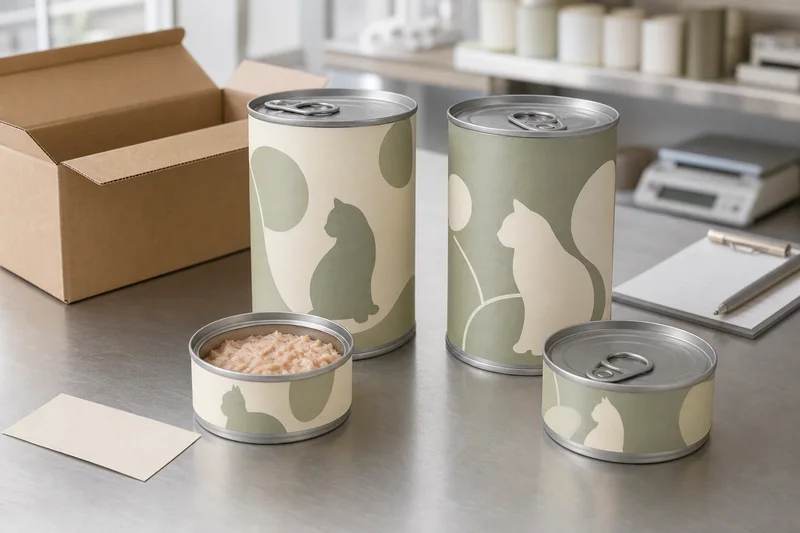
What to review before approving a canned-food sample
Images can help compare can form and visual presentation, but they do not replace a product sample or the supporting commercial documents. Before approval, buyers should record the exact supplier model reference, selected recipe direction, net weight, can diameter and height where applicable, fill appearance, ingredient and analytical information supplied for the product, label proof, barcode position, date coding approach, carton quantity, pallet or shipment plan, and destination-market requirements.
For the physical sample, check the can body, pull-tab lid, seam finish, label fit, color consistency, legibility of the approved artwork, and carton protection. For an open-can reference, confirm the product appearance against the approved sample rather than relying on a stylised marketing image. Packaging and product records should remain attached to the selected model, so a reorder can be tied back to the original approved can size, recipe, label version, and carton specification.
Use images that explain the product without making unsupported claims
The most useful catalogue images show the round metal can, the difference between selected sizes, the pull-tab lid, and an accurate open-can product view where needed. Clean unbranded mock-up imagery can help a buyer discuss label placement and shelf presentation, but final label content must come from the approved regulatory and commercial materials. Avoid adding unsupported health, nutrition, breed, life-stage, or flavour claims to a listing simply because a can design looks suitable for them.
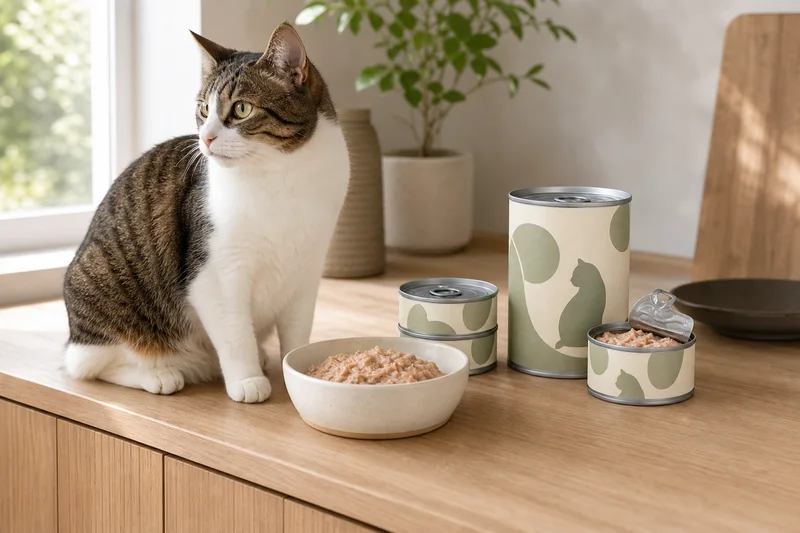
Combine cat food with a broader pet-store buying plan
A canned-food project does not need to travel alone. Buyers sourcing for pet shops and online channels may combine selected cat food formats with feeding bowls, cat toys, beds, hygiene products, dog treats, and other categories where the sourcing and shipment plan allows. Xinji Pet Supplies works around a one-stop buying-list model: share target products, references, quantities, packaging needs, destination market, and target price direction, then review suitable product options in one coordinated plan.
Read our cat treat tube guide for a related, but distinct, cat food format, and review our mixed container pet supplies service for order-planning context. Send the target can size, recipe direction, packaging references, planned market, and estimated order quantity. We can help coordinate samples, label and carton options, product comparisons, QC points, and a broader mixed-category sourcing plan.