
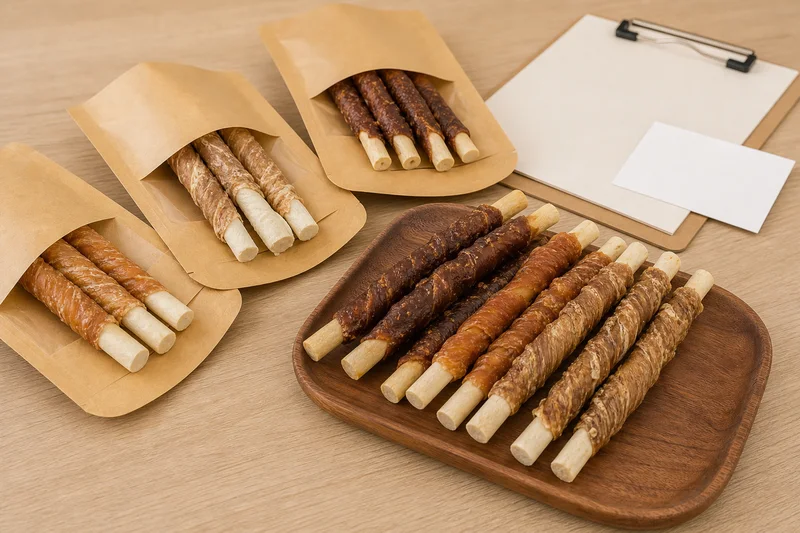
Dog treat ranges can look crowded when every protein, roll, bone, and shape is presented as a separate buying decision. Wrapped dog chews offer a more focused merchandising direction: a pale chew core covered with visible strips of chicken, duck, or other selected meat ingredients. The contrast between the core and the meat wrap gives the item a recognisable shelf appearance while allowing buyers to compare related recipes and formats inside one controlled product family.
The wrapped dog chews and meat rolls range brings together chicken- and duck-wrapped rolls, beefhide-style rolls, wrapped bones, milk or cheese roll directions, fruit-wrap styles, sandwich pieces, and donut-form treats. Availability, recipe, shape, ingredient declaration, dimensions, packaging, and order conditions must always be confirmed against the selected model and approved quotation. Grouping related forms on one page makes the assortment easier to review without creating a separate product URL for every visual variation.
Why wrapped rolls create a distinct treat-shelf role
Wrapped rolls are visually different from loose jerky strips, small baked biscuits, and shaped dental-chew formats. They can help a retailer build an easy-to-read dog-treat section with a visible core-and-wrap presentation, selected protein directions, and more than one size or pack format. This is a retail-merchandising distinction, not a claim about a product's nutritional, dental, or functional performance.
For a broader purchase plan, buyers can place wrapped rolls beside air-dried dog treats and jerky, dog dental chew formats, and baked treats and biscuits. Each family has a different visual role, recipe direction, and packaging discussion, so a focused selection helps a store avoid a shelf where every SKU appears interchangeable.
Build a controlled first assortment
A first selection does not need every listed shape. Start by deciding the target sales channel, expected pack style, consumer price direction, and how the range will sit beside jerky, biscuits, and other dog snacks. Then select a small number of recognisably different wrapped forms. The current product family includes rolls, bones, sandwich-style pieces, donut shapes, and selected fruit or vegetable-base directions in addition to chicken, duck, cheese, milk-roll, beefhide, and mixed recipe options.
- Core wrapped rolls: choose one or two visible protein or color directions that make the range easy to recognise.
- A second format: add a selected bone, donut, sandwich, or alternate roll shape only when it gives the shelf a clear visual difference.
- Pack presentation: compare bulk carton, retail pouch, jar, and buyer-label options against the intended channel and order plan.
- Clear model references: keep the approved model, recipe direction, pack count, and reference image together for quotation and repeat-order control.
This approach is different from trying to fill a container with one treat alone. A buyer can choose a practical number of wrapped-chew models, then combine them with other pet treat and pet-supply categories in a coordinated order. That gives stores and online sellers a wider assortment while keeping one sourcing workflow.
What to confirm before approving samples
Product images are useful for comparing the wrap coverage, core profile, color direction, and shape, but the final order should be confirmed against the selected sample and supplier documentation. For every approved wrapped-chew SKU, record the model reference, selected recipe or protein direction, dimensions or size range where supplied, piece count, net weight where relevant, ingredient declaration, shelf-life and storage information, packaging material, carton quantity, and any market-specific labelling requirements.
During review, also compare the visible meat wrap, exposed core ends, stick or shape consistency, breakage level, pouch seal, retail presentation, barcode space, and carton mark. These are practical procurement checks, not statements that every batch will look identical. The goal is to agree the acceptable product and packaging reference before bulk production rather than relying on an untracked image after the order is placed.
Use clear images without overpromising
For retail pages, catalogues, and buyer presentations, the most useful images show the complete wrapped roll, the contrast between the core and the meat layer, and the selected pack or assortment direction. Avoid a crowded collage that makes the chew shape hard to identify. A close product view and a realistic home context can explain the category, but a listing should not add unsupported health, dental, flavour, or nutritional claims. The final consumer-facing wording should follow the approved label and the requirements of the destination market.

Plan wrapped chews as part of one-stop sourcing
Wrapped dog chews can be one component of a wider pet-store order rather than a standalone container project. Buyers may combine selected dog treats with cat treats, feeding products, toys, carriers, beds, hygiene items, and other categories according to their target market. Our mixed container pet supplies service is built around that planning approach: share a buying list, references, quantities, packaging needs, and target price direction, then compare suitable options in one coordinated sourcing plan.
For a wider treat-mix perspective, see our dog treat assortment guide. Send the selected wrapped-chew form, target protein direction, preferred packaging, planned market, and estimated quantity. Xinji Pet Supplies can help coordinate product options, samples, packaging, QC points, and a practical mixed-category order plan.