
Cat wet food pouches are easy to overcomplicate. A buyer may see several flavour directions, colourful packs, and multiple cartons, then turn each visual difference into a separate product page or purchasing project. A better retail approach is to start with a controlled pouch family: a confirmed 80 g single pouch example, a selected 80 g x 12 boxed format, and only the recipe directions, label versions, and carton options that fit the intended market.
The cat wet food pouch range includes examples of 80 g pouches and 80 g x 12 boxed packs, with chicken, duck, small fish, and shrimp flavour directions by project. Final recipe, ingredients, feeding information, shelf life, net content, pouch material, packaging artwork, barcode, language, carton configuration, and destination-market requirements must be confirmed from the selected supplier documents before an order is approved.
Give the single pouch and the 12-pack different jobs
An 80 g pouch can serve as the core individual retail unit, while a 12-pouch box provides a clear multi-unit or display-pack direction. The two formats do not need to compete. They give pet stores and online sellers a simple way to test which pack role fits their channel, price level, customer basket, and shelf space without expanding the launch range into dozens of near-identical listings.
- Single-pouch format: use a selected 80 g pouch as the reference unit for pack handling, shelf presentation, and label review.
- 12-pack format: use an 80 g x 12 example when a boxed retail or multi-unit option fits the buying plan.
- Flavour direction: choose chicken, duck, small fish, shrimp, or another confirmed option only after reviewing the available product documents.
- Artwork route: agree the approved design, required language, barcode area, date coding, and carton marks before production.
This structure also makes a buying list easier to quote and reorder. Instead of asking for every pouch colour seen in a catalogue, the buyer can identify the exact selected product reference, pack format, flavour direction, artwork version, and carton plan. That record is more useful to both sides when samples, revisions, and repeat orders need to be traced.
What to check in a pouch sample and carton review
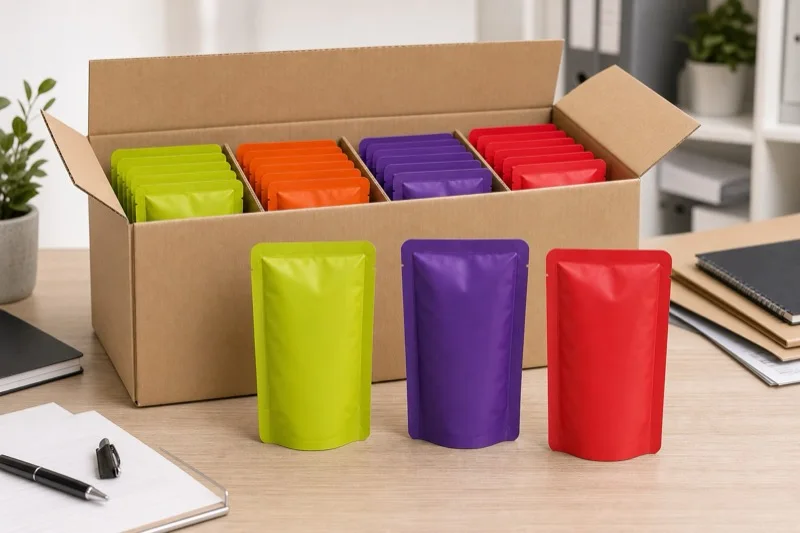
Catalogue images are useful for comparing the physical pouch form and retail presentation, but they do not replace an approved product sample and specification. For the selected range, buyers should record pouch dimensions where applicable, net content, filling and sealing appearance, recipe and ingredient information supplied for that project, label proof, barcode placement, date-coding method, 12-pack box construction, outer-carton quantity, and target-market compliance requirements.
For packaging review, check the pouch seal, tear area or opening format where applicable, print alignment, pack protection inside the box, carton strength, language version, and final carton marking. Do not treat an unbranded mock-up or a colour direction as proof of final formula, nutritional claim, life-stage suitability, origin statement, or regulatory approval. Those points need to be supported by the chosen product and market documentation.
Build a wet-food section without duplicating product pages
A useful range page should group genuine variants that share the same purchasing decision, not create one URL for every colour, flavour direction, or pack photo. The selected pouch family can be reviewed together because the buyer is comparing closely related 80 g pouch and boxed-pouch options. If a different product form has a different commercial decision, it deserves its own page. For example, canned cat food uses a metal-can format, while cat treat tubes and puree sticks are a separate format for a different assortment role.
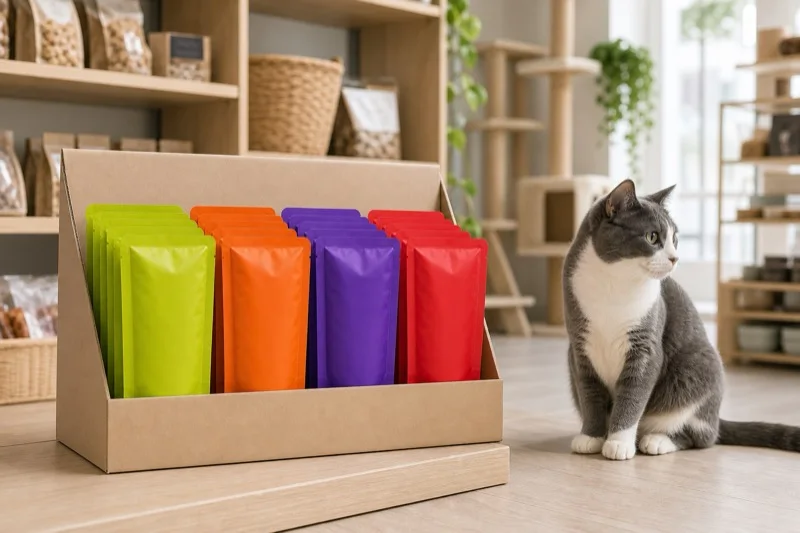
On a shelf or in an online product collection, clear pack-format grouping helps customers understand the choice without asking them to scan a long list of nearly identical items. Keep the number of initial pouch options focused, then add confirmed variants after the label, carton, cost, and replenishment plan have been reviewed. This keeps the range practical for small retail tests as well as broader import programmes.
Combine cat wet food with a wider pet-supplies order
Wet food does not need to fill a shipment by itself. A buyer can share a combined purchasing list covering selected cat food formats, feeding bowls, cat toys, cat furniture, hygiene items, dog treats, and other pet-supplies categories. Xinji Pet Supplies can review listed products, references, quantities, target pricing, packaging requirements, and any missing categories as one coordinated sourcing plan.
For broader retail planning, read our canned cat food range guide and our mixed container pet supplies service. Send the required pouch format, selected recipe direction, estimated volume, destination market, and packaging references. We can help coordinate product comparison, samples, labels, cartons, quality checkpoints, and a mixed-category order plan.