
Pet crisps and baked biscuits offer a different retail role from long jerky, dental chew shapes, wet food, or puree sticks. Their value is in a visible mix of thin crisp formats, small baked pieces, and shaped biscuits that can be organised into a clear shelf section. For pet stores, importers, and online sellers, the better starting point is a controlled product family with a few distinct forms, rather than a separate purchasing project for every color, flavour direction, or small shape change.
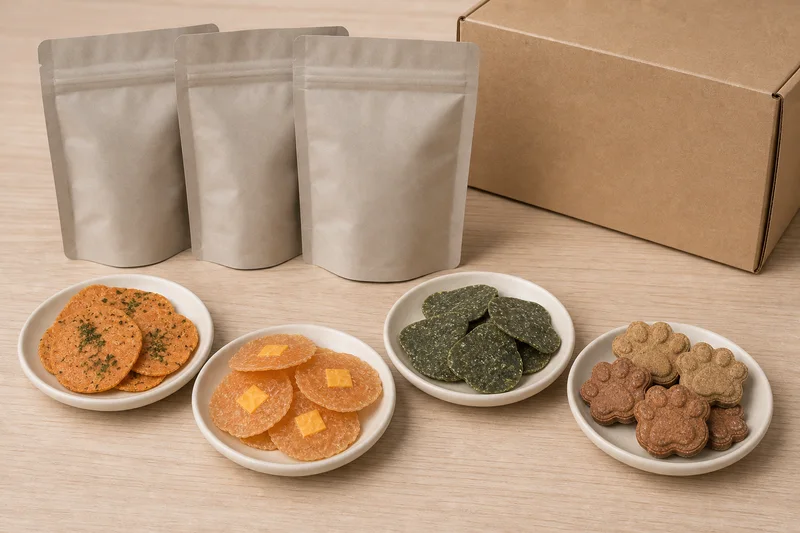
The pet crisps, baked treats, and biscuits range includes thin orange crisps with visible herb flecks, translucent tan crisps with small cheese-like inclusions, green crisp directions, and compact paw-print baked biscuits among the source examples. Other source directions include meat cookies, goat milk beans, sticks, doughnuts, and shaped snacks. Exact recipe, species suitability, ingredients, analytical information, net weight, texture, shelf life, packaging, and destination-market requirements must be confirmed for the chosen model before a quote, sample approval, or order is finalised.
Build the range by product form, not by every visual variation
A practical display-led range gives each form a job. Thin crisps create a lightweight, layered visual format. Paw-print biscuits give the assortment a recognisable baked shape. A recipe or colour direction can then be selected within the confirmed supplier range, but it should not automatically become a new standalone listing merely because it looks slightly different.
- Thin crisp direction: select a limited number of visible crisp forms, such as orange, tan, or green examples, after confirming the applicable recipe and specification.
- Baked biscuit direction: use paw-print or other shaped biscuits where a compact baked form fits the store's treat presentation.
- Recipe control: retain the approved product reference, recipe, intended species, ingredients, pack size, and supporting documents with the selected SKU.
- Packaging control: agree the pouch, jar, gift-style pack, label, barcode, date coding, and carton plan before production.
This approach keeps a treat shelf readable for a buyer and manageable for replenishment. It also reduces the risk of ordering many close visual variants without a clear product role. Buyers needing a more meat-forward format can compare the selection with air-dried dog treats and jerky; that is a separate form, packing discussion, and product decision from thin crisps or baked biscuits.
What to confirm during product and packaging review
Food imagery is useful for comparing form and shelf appearance, but it does not replace product samples or commercial documentation. Before approval, buyers should record the exact supplier model, selected recipe direction, intended species, ingredient and analytical information supplied for that product, net weight, product shape, production and shelf-life information, packaging material, label proof, barcode area, date coding plan, carton quantity, and any destination-market registration or labelling requirements.
For sample review, compare the visible crisp thickness, colour, inclusions, biscuit shape, and overall condition with the approved reference. Confirm the final product only against the chosen sample and product documents, not against a general lifestyle image. Then review how the selected item is protected in the approved pouch, jar, or other retail format, and how the finished packs are arranged in export cartons. Keeping the approved sample, label version, product reference, and carton details together makes reorders easier to trace.
Use clear imagery without adding unsupported claims
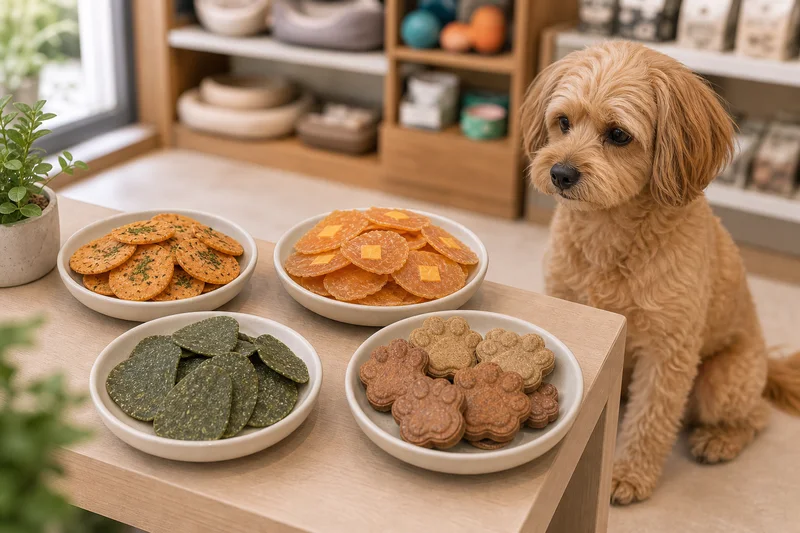
The most useful catalogue image shows the product form clearly: a thin crisp should still look thin, a cheese-like inclusion should be visible where it is part of the approved item, and a paw-print biscuit should retain its compact baked outline. Product images should not invent ingredients, feeding claims, nutritional outcomes, or suitability statements that are not supported by the final specification. Buyers can use clean unbranded imagery to discuss display and packaging direction, while the approved label and product documents remain the source of truth.
Combine treat formats in a wider one-stop buying plan
Pet crisps and baked biscuits can be one part of a wider pet-store order, not a standalone container project. Depending on the selected formulas and market requirements, buyers may review them alongside chicken and duck jerky treats, cat treat tubes and puree sticks, feeding products, toys, beds, hygiene items, and other pet supplies. Each product family has its own specification and packing checks, but the buying list can still be coordinated as one practical sourcing plan.
For broader snack-range context, read our dog treat assortment guide and review our mixed container pet supplies service. Send the preferred product forms, reference images, target market, intended species, packaging requirements, quantities, and any import-standard questions. Xinji Pet Supplies can help compare suitable supply options and coordinate a multi-category order plan.