
Low MOQ pet toys trial orders are useful when a buyer wants to test market demand before committing to a larger purchase. Toys are visual, seasonal, and easy to promote, but they also vary widely by material, pet size, durability, packaging, and safety expectations. A small test order should not be treated as a random mix of cheap SKUs. It should be designed to answer clear buying questions.
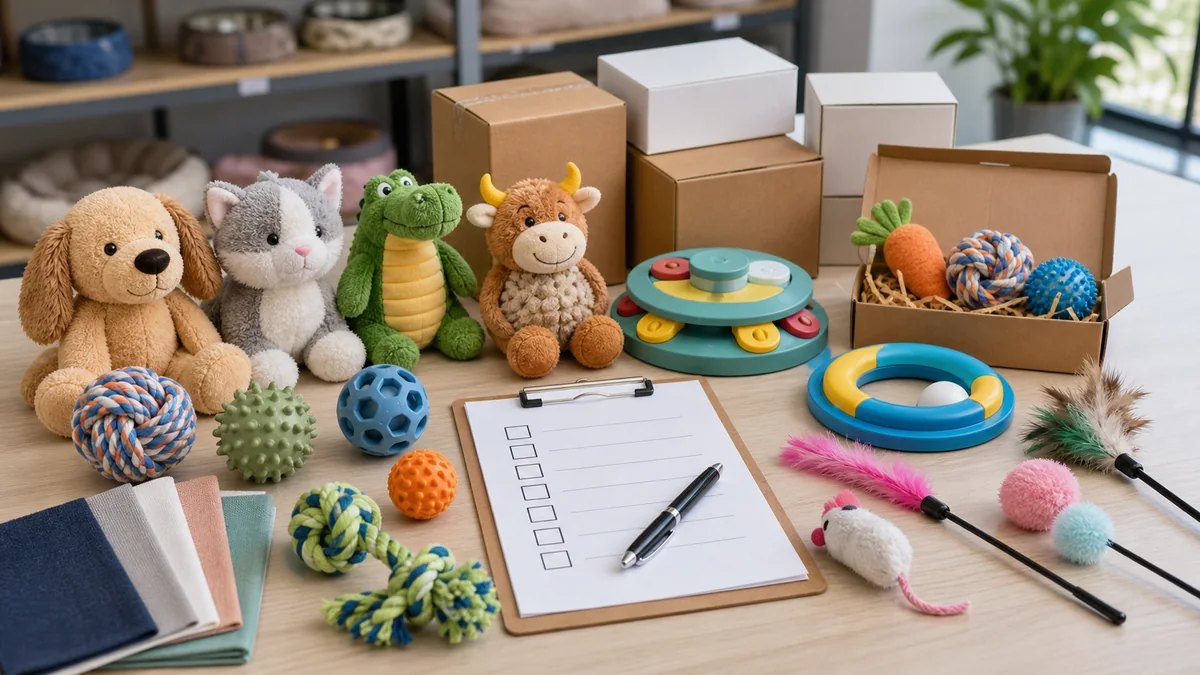
For pet stores, importers, e-commerce sellers, and distributors, a trial order helps compare toy types, price levels, packaging choices, and customer response. The goal is to find products that can become repeat SKUs, not only products that look attractive in photos.
Start With a Focused Toy Mix
A low MOQ order works best when the list is focused. Instead of testing every toy style at once, choose a balanced set that represents different buying roles.
- Daily impulse toys: rope toys, rubber balls, small plush toys, and teaser wands that support frequent retail sales.
- Higher-value toys: puzzle toys, interactive toys, treat-dispensing toys, and training toys for better margin testing.
- Seasonal items: holiday plush toys, outdoor toys, and promotional designs that can support campaign planning.
- Repeat candidates: products that can later support private label packaging, color options, or bundled sales.
If you are building a broader pet store assortment, combine this planning with the pet store assortment buying guide so toys are tested as part of a larger shelf plan.
What to Check Before Confirming Samples
Pet toy samples should be reviewed for more than appearance. For rubber and TPR toys, check odor, hardness, flexibility, surface finish, and size suitability. For rope toys, check knot strength, loose fibers, and color bleeding. For plush toys, check fabric, seam strength, filling, squeaker placement, and loose parts.
A low MOQ trial order should also confirm whether the supplier can keep the sample quality consistent in bulk production. If the sample is acceptable but the production material changes later, the trial order does not provide reliable data.
Packaging Choices for Trial Orders
For first orders, standard packaging often makes more sense than full custom packaging. It reduces MOQ pressure and keeps the test flexible. However, packaging should still match the sales channel. Pet stores may need hang cards, shelf-ready packs, or simple barcode labels. E-commerce sellers may care more about product protection, small parcel handling, and photo presentation.
If private label is part of the future plan, use the first order to confirm label size, packaging structure, carton strength, and barcode placement. Then move custom packaging to the products that show repeat potential.
How to Judge the Trial Order Result
A trial order should create information for the second order. Track sell-through, complaints, returns, packaging damage, customer questions, and which styles were reordered first. A toy that sells quickly but causes quality complaints may not be a good repeat item. A slower-selling toy with strong margin and low defect risk may be worth keeping.
- Which toys sold without heavy discounting?
- Which materials or sizes received better feedback?
- Which packaging worked best for shelf display or online fulfillment?
- Which toys had odor, loose parts, breakage, or stitching issues?
- Which SKUs should move from trial quantity to repeat order?
When to Move From Trial Order to Bulk Buying
Move to bulk buying only after the product role is clear. For repeat SKUs, prepare a stronger specification sheet and QC checklist. For seasonal toys, confirm timing and packaging earlier. For private label candidates, review artwork, label language, cartons, and approval samples before production.
Xinji Pet Supplies helps buyers plan low MOQ pet supplies trial orders across toys, accessories, grooming, apparel, hygiene, and packaging categories. Share your target toys, market, quantity range, packaging needs, and destination country, and we can prepare practical test order options.