
Pet stores rarely grow from one product alone. A good retail program needs daily-use products that sell repeatedly, impulse items that make the shelf more interesting, seasonal products that create promotion opportunities, and a small group of test SKUs that can become future repeat items. When buying from China, the real challenge is not only finding products. The challenge is building an assortment that can be quoted, sampled, inspected, packed, shipped, and reordered without creating unnecessary complexity.
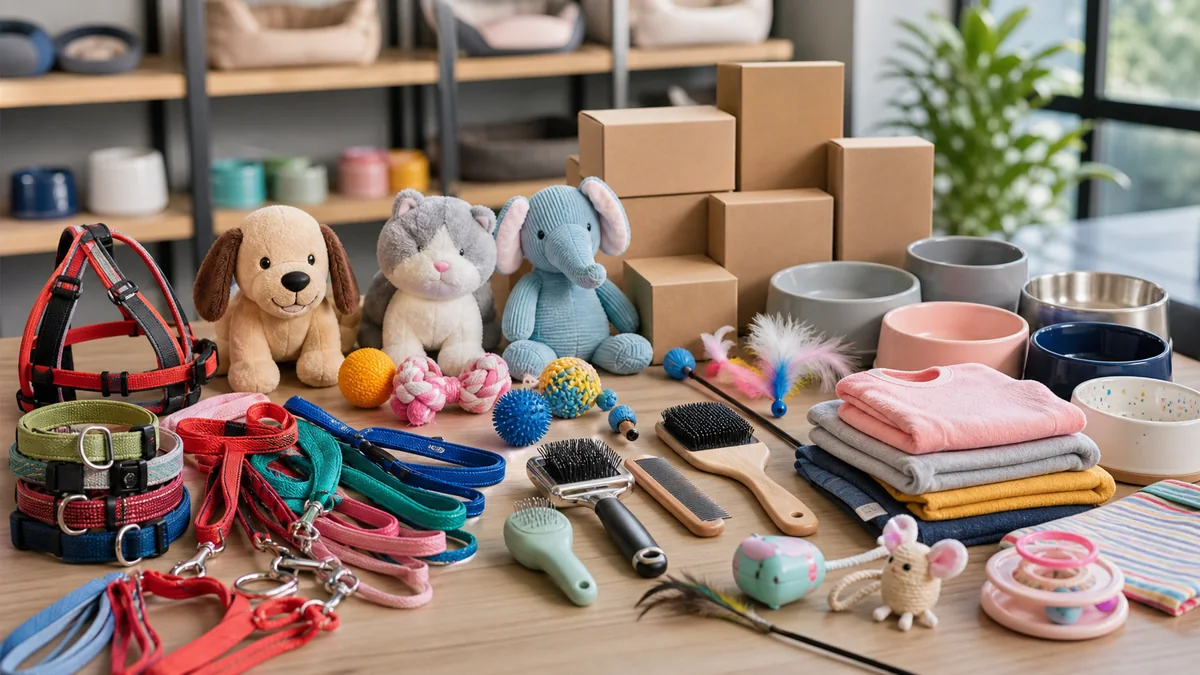
For overseas pet stores, retail chains, and local distributors, pet store product supply should start with a clear buying structure. Instead of sending hundreds of unrelated screenshots, buyers get better results when they group products by category, target price, packaging level, and expected sales role.
Start With Four Product Roles
A balanced pet store assortment usually includes four different product roles. Each role should be sourced with a different expectation for MOQ, packaging, and repeat planning.
- Core daily-use products: collars, leashes, bowls, beds, grooming tools, cleaning products, hygiene items, and cat accessories that customers buy regularly.
- Impulse and discovery products: pet toys, teaser wands, small accessories, seasonal plush toys, and giftable items that make displays more attractive.
- Seasonal and promotional products: dog shoes, raincoats, cooling apparel, holiday toys, outdoor accessories, and bundled care sets.
- Private label candidates: products with stable repeat potential where logo, labels, barcodes, and retail packaging can add brand value.
Do Not Treat Every SKU the Same
One common mistake is requesting the same MOQ, packaging, and customization level for every item. A dog leash, a cat teaser wand, a pet bed, a deodorizing spray, and a pet raincoat have very different production and packing logic. Some items are suitable for lower trial quantities. Others need larger cartons, longer preparation time, or more careful inspection.
Before quoting, separate products into "must-have repeat SKUs" and "test SKUs." Repeat SKUs deserve more sample comparison and packaging attention. Test SKUs should be kept simpler so the first order can validate market demand without locking too much cash into inventory.
Build a Price Ladder
Pet stores often need entry, mid-range, and premium options. A single category such as pet toys can include low-cost rope toys, mid-range interactive toys, and premium puzzle toys. Dog supplies can include basic collars, reflective walking accessories, seasonal apparel, and higher-value travel items.
A price ladder helps the supplier understand what level of material, packaging, and finish to prepare. It also helps the buyer avoid comparing products that look similar in photos but belong to different retail price points.
Packaging Should Match the Shelf
Retail packaging is not only decoration. It affects MOQ, carton size, barcode use, labeling, customer trust, and the way products are displayed. For a first order, many buyers use standard packaging for test SKUs and reserve private label packaging for products with stronger repeat potential.
If your store wants its own brand presentation, review the packaging support options and the packaging and QC checklist. This helps prevent common issues such as missing label language, weak cartons, unclear barcode placement, or packaging that looks good in mockups but does not protect the product during export.
Use Mixed Orders Carefully
Many pet stores want to combine toys, apparel, grooming, hygiene, beds, feeding products, and cat products into one shipment. This is reasonable, but it needs structure. A mixed container pet supplies order should group products by supplier, category, carton handling, and inspection needs. Otherwise, the order becomes difficult to track and the packing list becomes unreliable.
For first-time sourcing, it is usually better to build a focused assortment with enough depth in selected categories rather than spreading the order too thin across too many experimental products.
Information to Prepare Before Requesting a Quote
- Target sales channel and store type.
- Product reference photos or links grouped by category.
- Expected retail price level or target purchase price range.
- Estimated quantity by SKU and by category.
- Packaging expectations: standard pack, retail pack, private label, barcode, label language, or carton marks.
- Destination country and preferred shipping plan.
- Priority products for samples before order confirmation.
A good pet store buying list does not need to be perfect, but it must be organized enough to compare options. Xinji Pet Supplies helps buyers turn that list into product groups, quotation direction, sample priorities, packaging notes, and a more realistic order plan.