
Low MOQ private label pet supplies projects need careful packaging decisions. Many buyers want their own logo from the first order, but full custom packaging can increase MOQ, cost, lead time, and approval risk. A better approach is to choose a packaging level that matches the product stage, sales channel, and expected repeat potential.
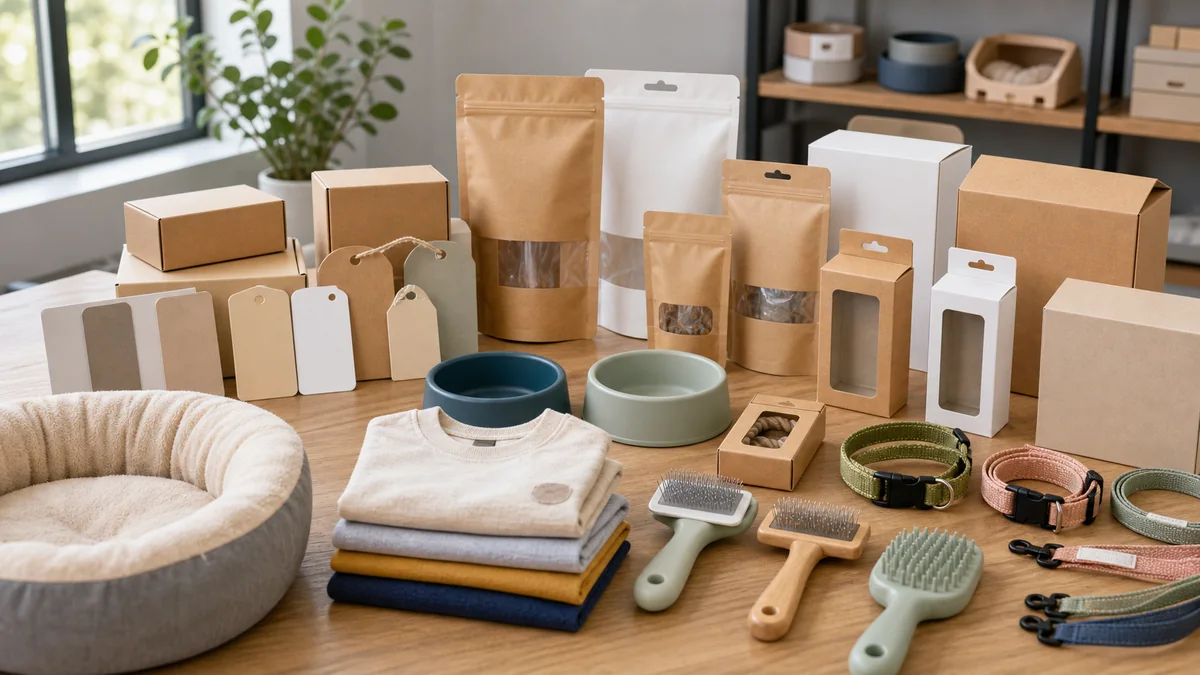
This guide is for importers, pet stores, e-commerce sellers, and brand owners testing private label pet supplies with controlled first orders. The aim is to build brand presentation without making the first order too complicated.
Choose the Right Packaging Level
Not every product needs full retail packaging at the trial stage. A grooming brush, collar, pet bowl, dog apparel item, bed, toy, or hygiene product may each require a different packaging structure.
- Standard packaging: suitable for early tests, mixed orders, and products where shelf presentation is not the first priority.
- Logo label or sticker: useful for adding brand identity without changing the entire packaging structure.
- Hang tag or sleeve: good for collars, apparel, grooming tools, and accessories that need retail display.
- Printed box or card: stronger for e-commerce photos, giftable products, premium toys, and private label programs with repeat demand.
- Export carton marks: important for shipment handling, warehouse receiving, and SKU identification.
For a deeper checklist, review the private label packaging and QC guide.
What Buyers Should Prepare Before Quoting
Private label quotations become more accurate when the buyer provides clear packaging expectations. A supplier cannot quote reliably if the request only says "add my logo." Packaging material, size, print method, barcode, label language, carton strength, and order quantity all affect cost and MOQ.
- Product category and target SKU list.
- Sales channel: pet store, distributor, marketplace, subscription box, or brand website.
- Logo file, brand color reference, and basic label content.
- Barcode and required market language.
- Expected quantity by SKU and packaging level.
- Destination country and carton handling requirements.
Keep First Orders Flexible
For a first order, buyers should avoid locking too many SKUs into expensive packaging. Start with the products most likely to repeat. Use simpler packaging for test SKUs and reserve full custom packs for proven products.
This is especially important for mixed container pet supplies orders. If every product requires a different custom pack, artwork approval, label check, and carton change, the project becomes difficult to manage. A staged private label plan is usually more practical.
Sample Approval and QC Points
Packaging samples should be checked before production. Confirm color, size, material, printing position, barcode readability, label language, carton marks, and product fit. Also check whether the packaging protects the product during export and storage.
Common issues include labels that are too small, weak hang holes, cartons that crush easily, unclear SKU marks, packaging that looks good in photos but does not fit the product, and missing approval files before production.
When Low MOQ Private Label Makes Sense
Low MOQ private label works best when the buyer has a clear product direction and wants to test a market without overbuilding inventory. It is suitable for selected pet toys, grooming tools, collars, leashes, apparel, bowls, beds, and accessories with repeat potential.
Xinji Pet Supplies helps buyers compare standard packaging, label-only options, hang tags, retail boxes, cartons, and sample approval paths for packaging support. Share your product list, target channel, logo needs, and quantity range, and we can suggest packaging options that match a first order.