
Private label pet supplies can help buyers build stronger margins and clearer brand identity, but the first order should be controlled carefully. A buyer may want logo labels on collars, custom hang tags for apparel, printed cards for toys, retail boxes for grooming tools, or coordinated packaging across several categories. If the launch plan is not clear, the project can become slow, expensive, and difficult to inspect.
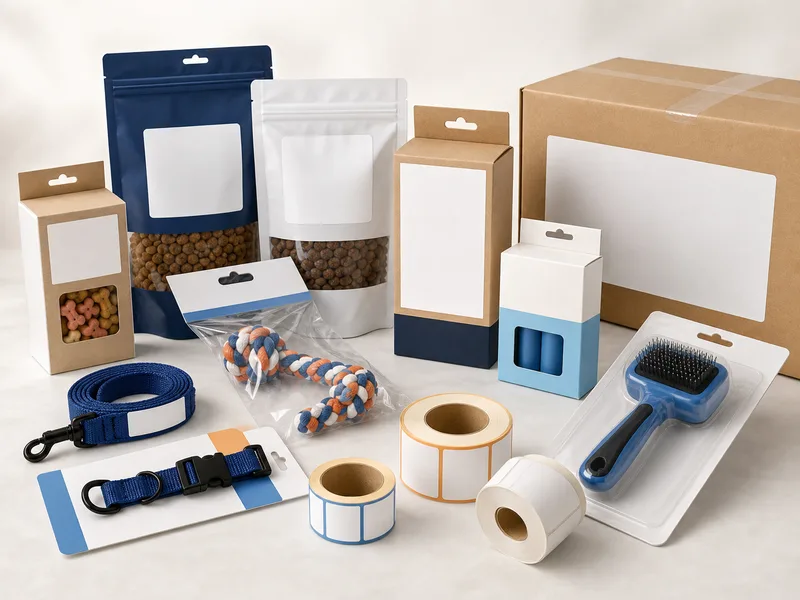
This guide explains how importers, pet stores, e-commerce sellers, and brand owners can prepare a private label pet supplies launch without overcomplicating the first order.
Choose Products That Are Suitable for Private Label
Not every product should become private label immediately. The best early choices are products with repeat demand, stable structure, manageable MOQ, and clear retail presentation.
- Good early choices: collars, leashes, harnesses, grooming tools, toys, bowls, beds, waste bag holders, apparel accessories, and simple care items.
- Needs more control: products with electrical parts, liquids, sprays, chemical claims, complex packaging, or strict market restrictions.
- Better for later stages: products requiring molds, complex certification, or large full-custom production.
If the buyer is still testing market demand, start with standard product structures and customized packaging. Full product redesign can wait until repeat orders prove demand.
Prepare a Clear Brand File Pack
Private label work becomes faster when the supplier receives complete files. A logo screenshot is not enough for production. The buyer should prepare vector logo files, brand colors, font references, barcode files, label language, product names, size information, and carton mark requirements.
The file pack should include:
- Logo in AI, EPS, SVG, or high-resolution PDF format.
- Brand color codes and acceptable color tolerance.
- Barcode, SKU code, and model naming rules.
- Label text and target market language.
- Packaging dieline if available.
- Retail channel requirements such as hang hole, shelf display, or e-commerce photo needs.
- Carton mark format for warehouse receiving.
For packaging options at low quantity, read the low MOQ private label packaging guide.
Match Packaging Level to First Order Risk
A first private label order should not use the most complicated packaging by default. Packaging level should follow product maturity.
- Logo sticker: low cost and suitable for early tests.
- Hang tag: useful for apparel, collars, leashes, harnesses, and soft goods.
- Header card or sleeve: useful for toys, grooming tools, and accessories that need retail display.
- Printed box: suitable for higher-value products or products with proven reorder demand.
- Bundle packaging: useful for sets, gift products, and e-commerce offers.
The goal is to create brand recognition without forcing high MOQ or long artwork approval on every SKU.
Approve Samples in Two Steps
Sample approval should separate product approval from packaging approval. A product sample checks material, size, function, color, stitching, hardware, finish, smell, and usability. A packaging sample checks logo placement, print color, label content, barcode, carton mark, and retail display.
For mixed-category private label programs, buyers should approve the highest-risk products first. Dog apparel, harnesses, toys with stitching, grooming tools, and custom packaging usually need more attention than simple accessories.
Set First Order Quantities by SKU Role
Do not give every private label SKU the same order quantity. A proven product may justify a larger quantity. A new design may need a smaller trial quantity. A packaging-heavy product may need minimum print quantity even if the product quantity is lower.
Practical first order grouping:
- Core SKUs: higher quantity and stronger packaging.
- Test SKUs: lower quantity and simpler packaging.
- Seasonal SKUs: quantity based on selling window.
- Bundle SKUs: quantity based on set components and carton planning.
This method keeps the launch flexible and protects cash flow.
Quality Control Points for Private Label Orders
Private label QC must check both product quality and brand presentation. A technically acceptable product may still fail if the logo is wrong, label language is inconsistent, barcode cannot scan, or carton marks do not match the buyer's warehouse system.
- Approved sample comparison.
- Logo size, position, and color.
- Label language and barcode scan test.
- Packaging material and print clarity.
- Product size, material, hardware, stitching, and finish.
- Inner packing and export carton protection.
- Carton mark, SKU code, and quantity per carton.
For a detailed checklist, see the private label packaging and QC checklist.
Launch Checklist
- Target category and SKU list.
- Sales channel and target market.
- Brand file pack and label language.
- Packaging level by SKU group.
- Sample approval notes and photos.
- First order quantity by SKU role.
- QC standard and carton mark requirement.
- Reorder plan after market feedback.
A private label launch works best when the buyer starts with controlled customization, clear files, and realistic MOQ expectations. For support across multiple categories, send a buying list through the inquiry form.